About The Queen Cells

Queen Cells & Queen Cups
Not every “peanut” means a swarm — and not every cup becomes a queen.
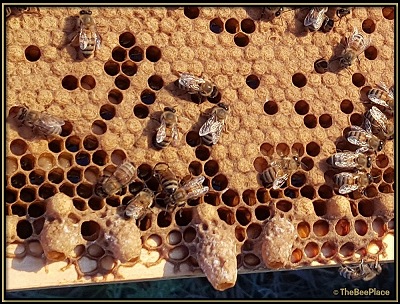
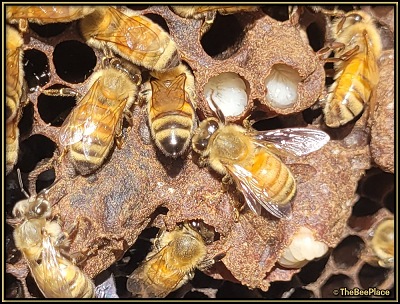
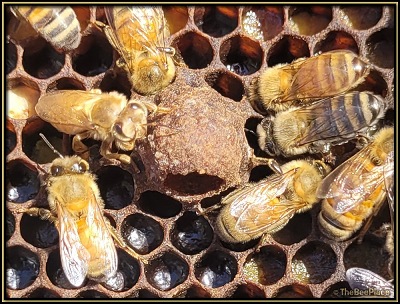
Queen cells are the larger peanut-shaped cells bees build when they intend to raise a new queen.
Unlike worker brood cells, which are horizontal and uniform, queen cells extend outward from the comb and provide the space needed to develop a fully formed reproductive queen.
Queen Cells – 3 Flavors – 1 Purpose
- Swarm Cells – Replace a parent queen for colony reproduction
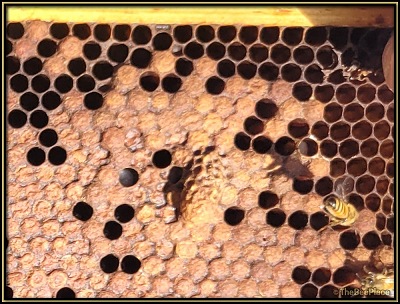
- Supersedure Cells – Replacing a failing queen
- Emergency Cells – Replacing a missing queen
Before Making Any Decisions
Finding a queen cell does not automatically mean action is required.
Before removing cells, splitting the colony, ordering a queen, or assuming the hive has swarmed, gather additional information.
- Are the cells queen cups, swarm cells, supersedure cells, or emergency cells?
- Are the cells open, capped, hatched, or torn down?
- Are fresh eggs present?
- Is open brood present?
- Is the queen present?
- Has colony population changed noticeably?
- How many cells are present?
- Where are the cells located within the brood nest?
The answers often reveal whether the colony is preparing to swarm, replacing an aging queen, recovering from queen loss, raising a queen as a precaution, or simply maintaining empty queen cups.
A queen cell should be evaluated as part of the entire colony. Looking at a single cell rarely provides enough information to make a sound management decision.
Queen Cups – Small bowl shape cups that may or may not ever become queen cells. As long as they are empty and dry, they can usually be safely ignored.
In the natural world these all serve the same purpose — producing a new queen.
The difference is why the colony decided to build them.
In most cases the location of the cell within the brood nest tells the story.
Follow the links below to learn how beekeepers interpret each type during hive inspections and what they mean to the bees and the beekeepers.