

About Africanized Bees

Africanized Honey Bees
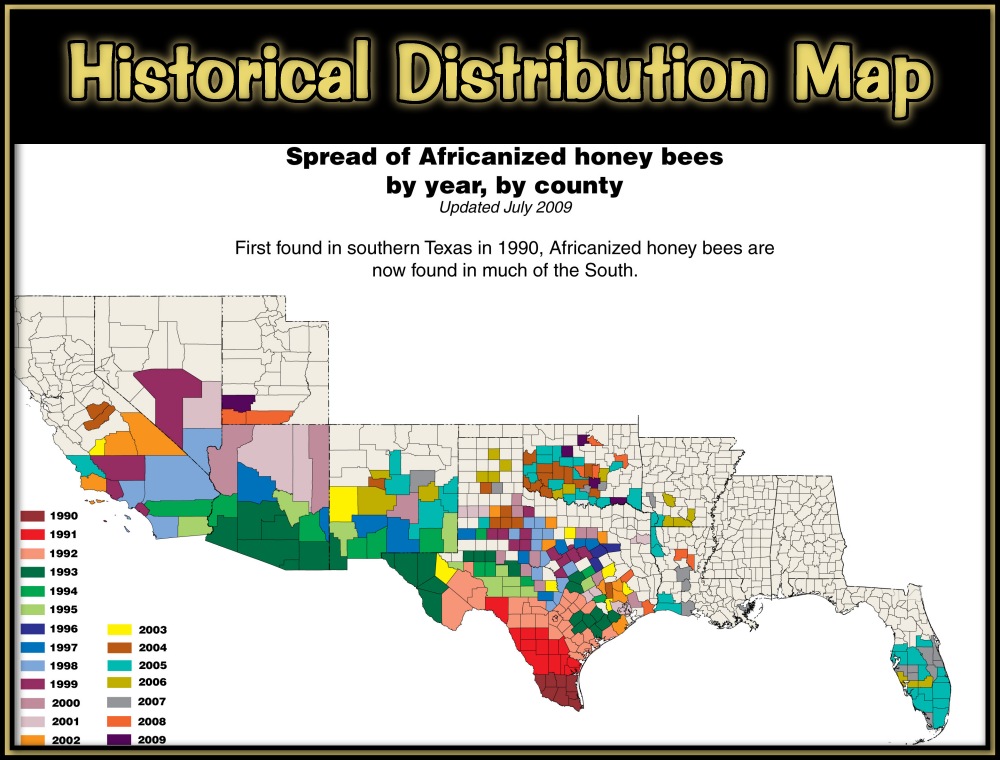
Africanized honey bees (AHB) are a hybrid strain of the Western honey bee (Apis mellifera) that became established in parts of the southern United States beginning in the early 1990s. While they are the same species as European honey bees, certain behavioral traits can differ significantly.
What Makes Them Different?
Africanized honey bees are not a separate species. They are a regional strain of Apis mellifera that developed from African honey bee genetics introduced into South America in the 1950s. Over time, these genetics spread naturally through swarming and interbreeding.
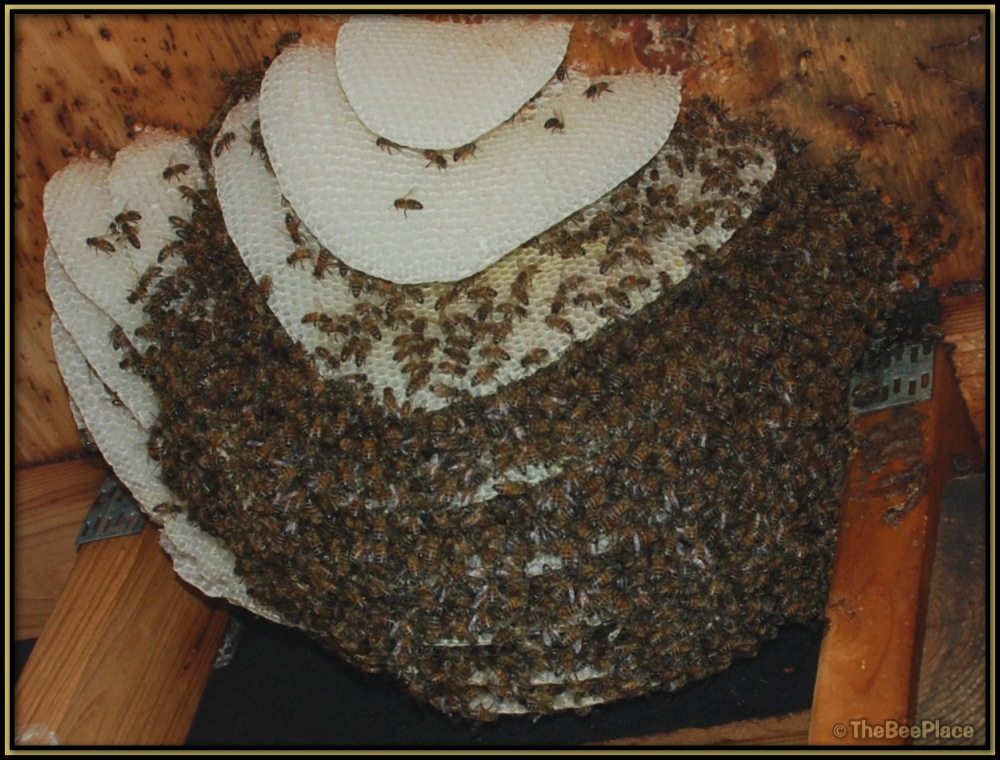
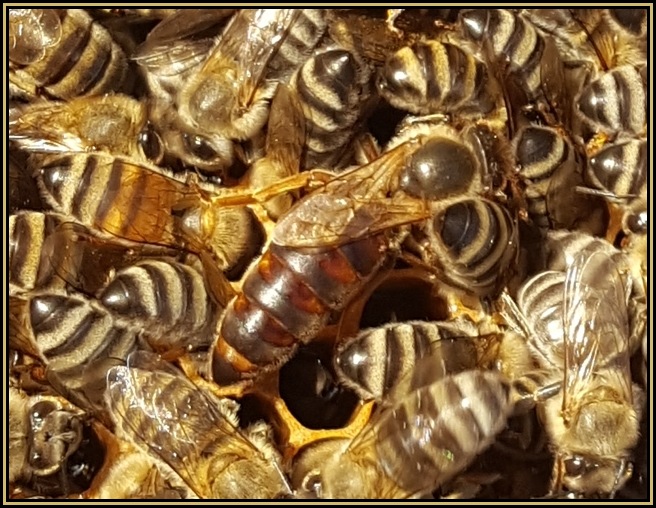
Visually, Africanized bees look nearly identical to other honey bees. The primary differences are behavioral rather than physical.

Behavioral Characteristics
- More defensive response to disturbance
- Quicker to mobilize large numbers of guard bees
- Greater sensitivity to vibration and movement
- More frequent swarming and absconding behavior
- May pursue perceived threats farther than typical European strains
It is important to understand that defensiveness exists on a spectrum. Not every colony with Africanized genetics behaves the same way, but unmanaged or feral colonies in affected regions can present elevated risk.
Management and Public Safety
Proper queen selection and responsible hive management greatly reduce the likelihood of excessive defensiveness in managed colonies. Commercial and responsible hobby beekeepers routinely requeen colonies that display undesirable traits.
Public awareness and responsible management practices have significantly reduced incidents compared to the early years of Africanized expansion.
Our Approach
At The Bee Place, we select and maintain gentle, manageable stock suitable for backyard and commercial beekeeping. Colonies that display excessive defensiveness are not used in our breeding program.
Education and proper management are key. Honey bees are valuable pollinators, and understanding their behavior allows us to work with them safely and responsibly.
Learn More About Bee Safety
Anyone working around honey bees should understand basic safety practices, including how to respond to stings and when to seek medical attention. For practical guidance, visit our Bee Safety page.
The Scientifics of it all
So the "colony mentality" is exactly where it all begins. The workers aren't just "following" the queen's pheromones like some bossy mom; they're a genetic mash-up, and defensiveness kicks in from their own DNA, especially the half from dad—the drones.
From Guzmán-Novoa's 2005 study (Journal of Heredity), they did these clean reciprocal crosses: gentle European queen mates with Africanized drones. In the controlled trials, it was noted that these workers sting like crazy—way more on leather patches than if it's the other way around (Africanized queen + gentle drones).
Quote from it: "bees from hybrid colonies of Africanized paternity left more stings... Results strongly suggest paternal effects of African origin increasing the defensive behavior of hybrid colonies." So even a super-gentle Italian queen, when mating, if she grabs one or two hot drones locally, her daughters inherit that "fight" gene set. It's not dominance like one trait wins—it's paternal bias; dad's alleles crank the aggression dial higher.
Why? Defensiveness traits—like alarm pheromone response or guard stinging—are polygenic, and studies show they're more expressed when paternally inherited. Workers aren't uniform clones; they're from multiple patrilines (one drone = one group of sisters). If aggressive ones are in there, they trigger the whole hive—more guards, faster fly-offs, chain reactions.
What about the Queen pheromones? They smooth social stuff, like ovary suppression or recognition, but they don't rewrite baseline temperament. No override—genetics sets the floor, pheromones tweak the mood.
Randy Oliver backs this indirectly: in his breeding info, he stresses flooding drone pools with your good stock so queens mate mostly gentle drones, avoiding that flip. In Africanized zones, even partial bad paternity turns'em mean quick.
So it makes total sense that when allowing hives natural requeening in our region, this setup pulls in local drones which depending on the exact location can be dominated the wrong ones, so boom, aggressive workers dominate the response. The science shows that it is the workers run the show genetically.
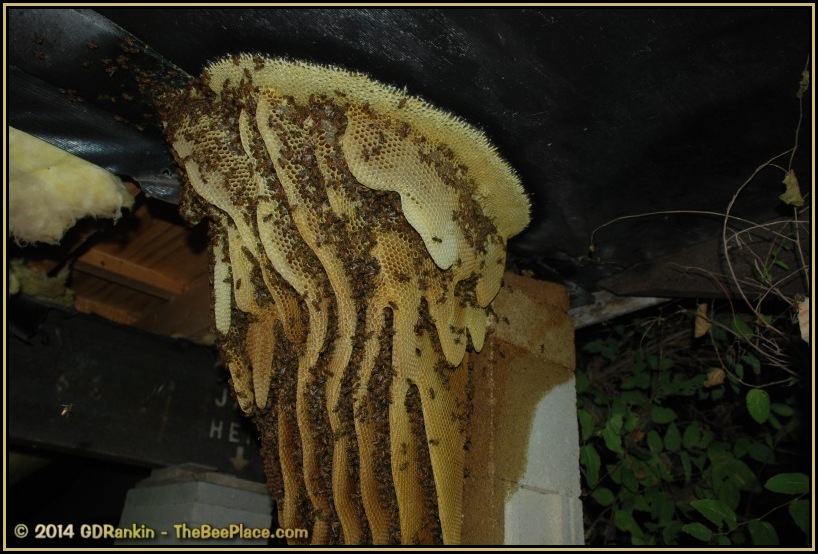
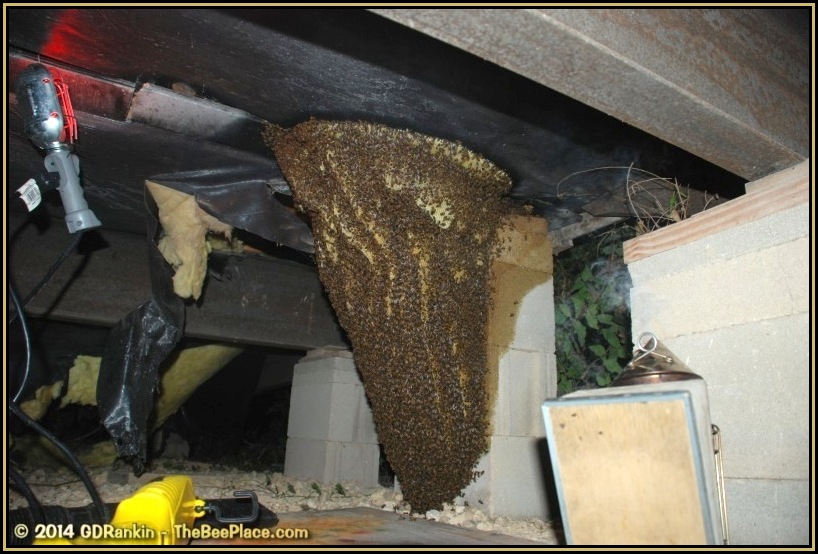
Feral bee relocated from under a mobile home
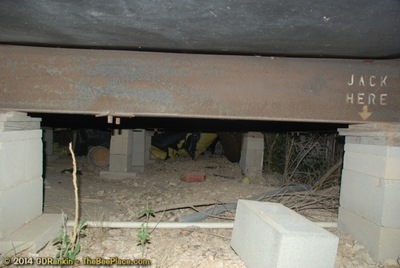
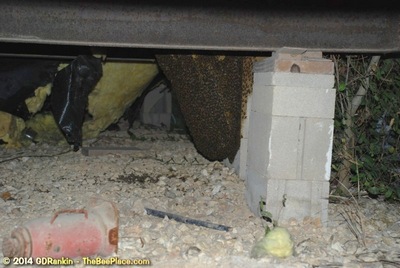
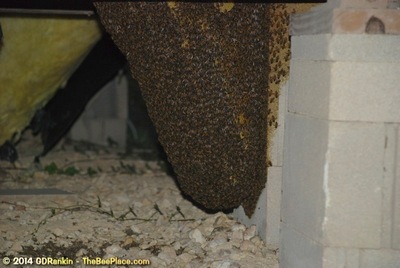
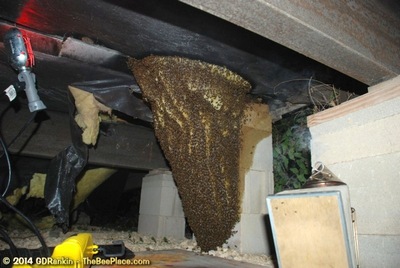
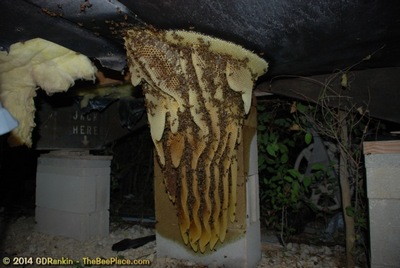
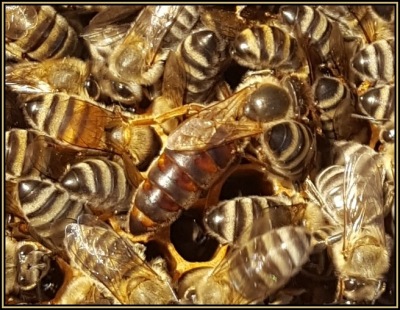
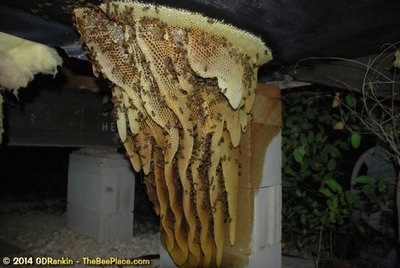
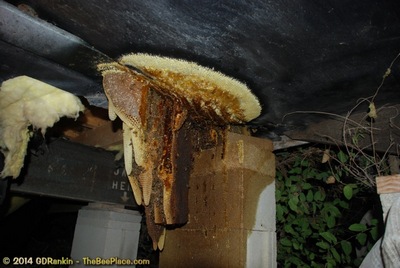
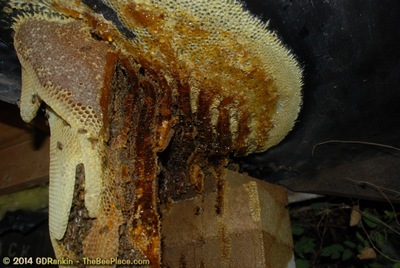
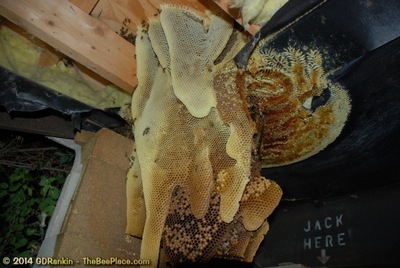
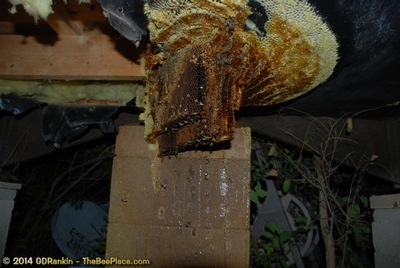
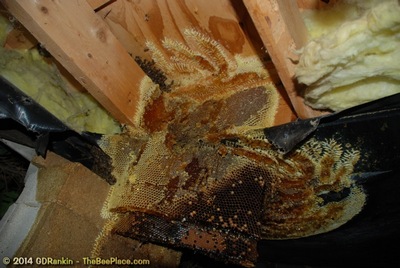
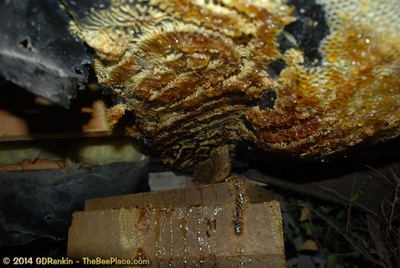
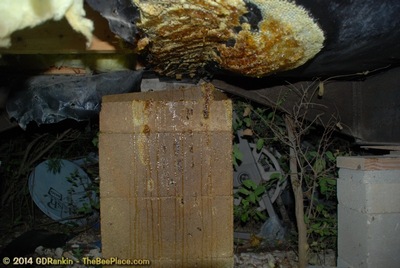
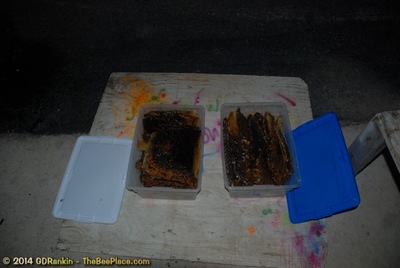
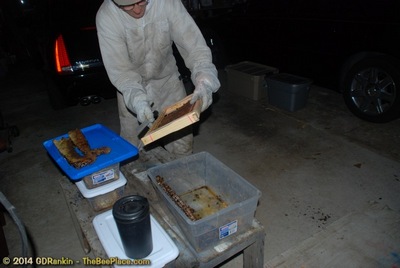
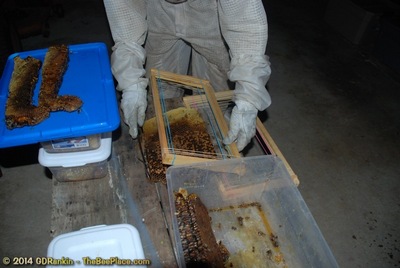
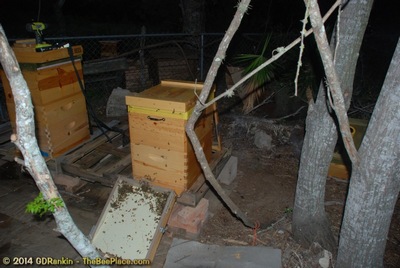
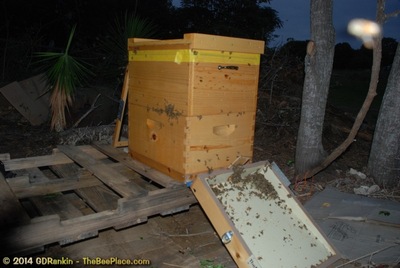
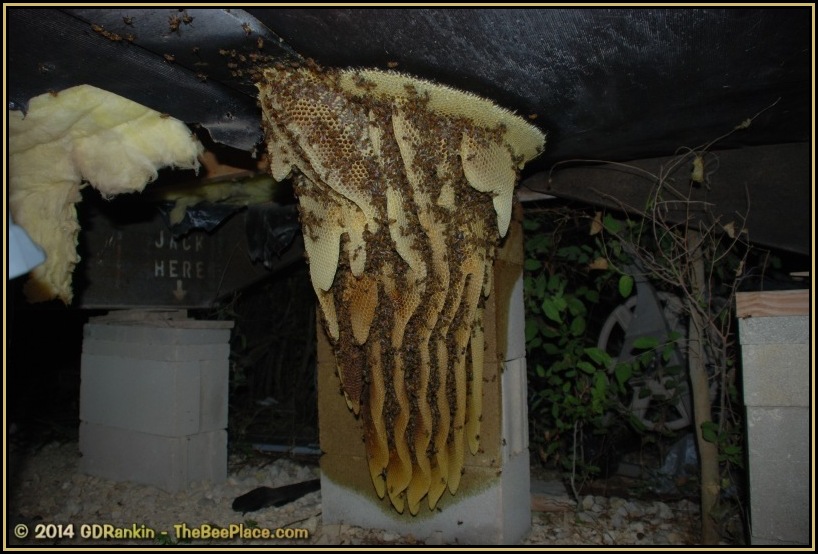
Beautiful bee colony removal images from 2104

