

Beekeeper Safety

Safety is Priority #1

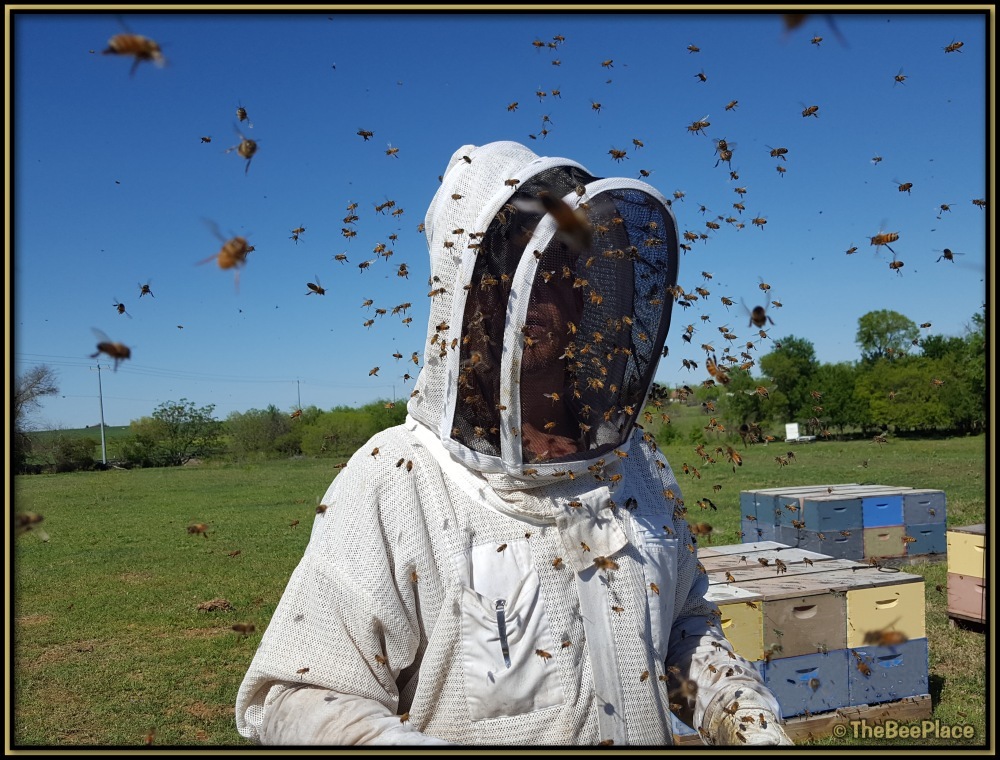
Beekeeping can be fun and rewarding for the whole family, but it comes with responsibility and understanding. This section covers practical, real-world safety habits for working hives, handling equipment, and protecting not only ourselves, but others all around us.

Proper Protection Helps Keep Us All Safe
So can properly managed hives and understanding a few important points about keeping bees.
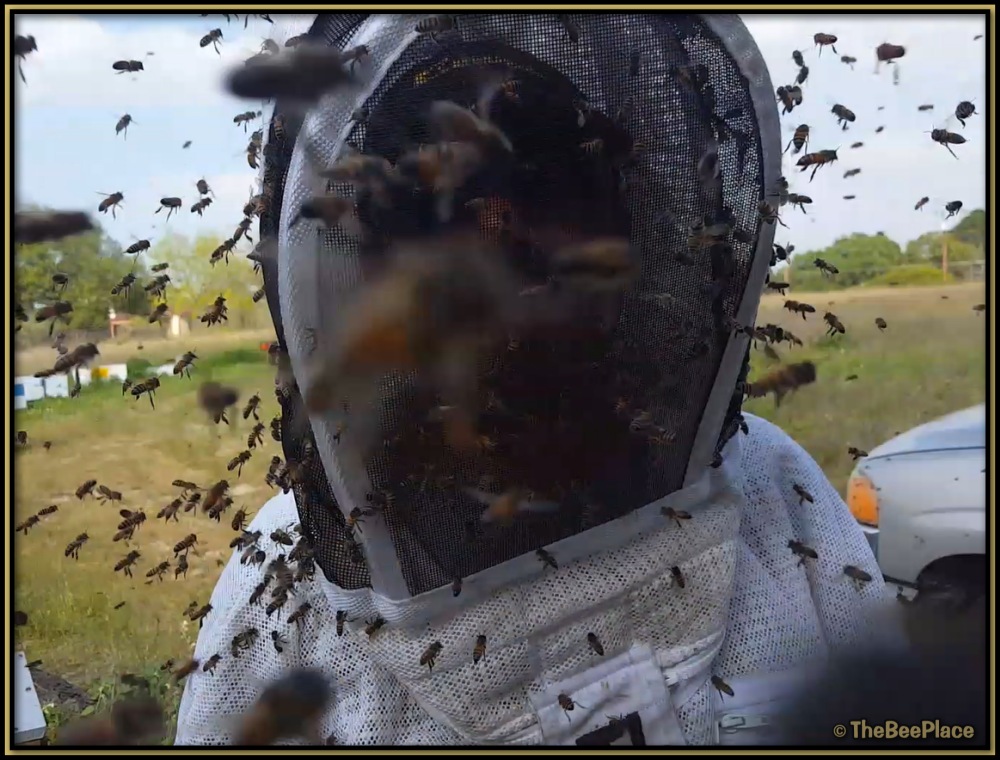
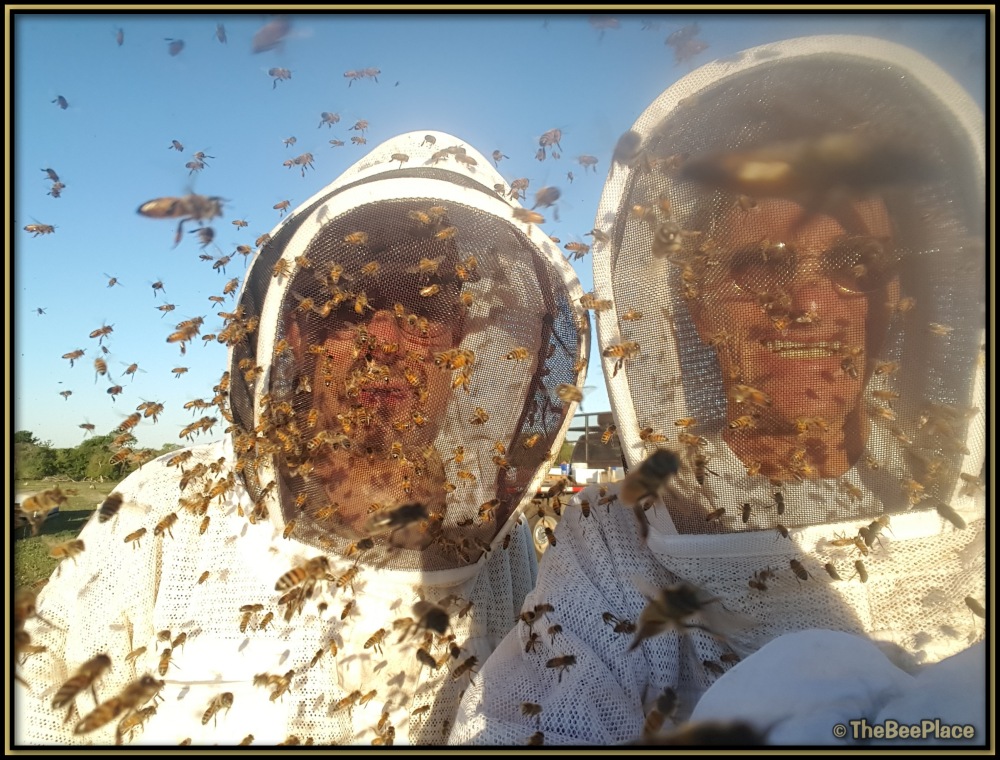
There is much more to the beekeeping journey than worrying about getting stung. These are incredible creatures that are not looking for trouble without reason—unless they are hot-tempered feral bees, like shown in the photo.
What matters most is understanding what we are working with.
In South Central Texas, that starts with recognizing that Africanized genetics still exist in the wild. That is not theory—it is reality. And if those genetics make their way into our hive, which often happens when hives swarm, the behavior can change fast.
For these reasons, this Beekeeper Safety section is geared towards "worst case scenarios" to help keep everyone safe when aggressive bees are encountered.
Keeping good genetics is not only optional, it is our responsibility. It can also keep us from having to wear full protective gear in the heat of the summer.
If we choose to keep bees, we are also choosing to manage their temperament. That means monitoring our hives and requeening when needed. Not on a schedule, but based on the behavior - the hive's temperament.
When that responsibility is ignored, the risk does not stay in our bee yard. It extends to our family, our neighbors, their pets, and anyone nearby.
The difference between safe bees and dangerous bees is not random, it is proper management which come with understanding.
Everything that follows on this page is built around that understanding.
We are not here to sugar coat anything—we are here to prepare others, based on our experiences dealing with hot bees. We are hoping to help by providing the information needed to learn why bees change from gentle to defensive seemingly overnight and how to manage them and safely return them to gentle bees with a new queen.
See About Africanized Bees for more on this topic.
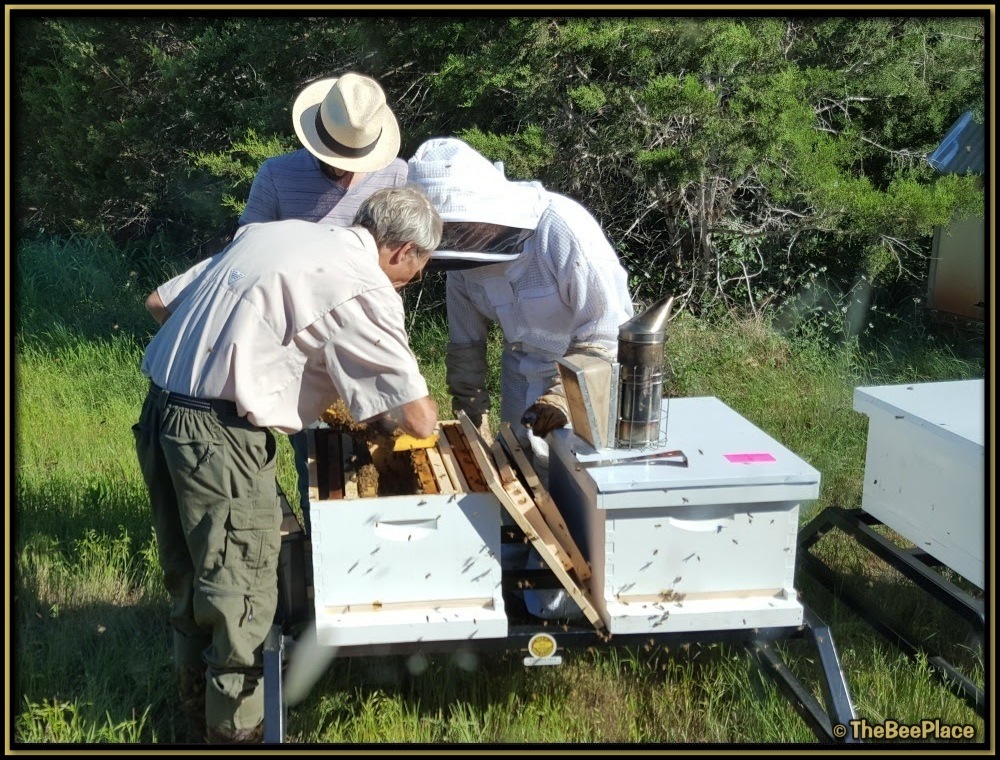
Gentleness Starts With Genetics
Much like anything else, there is a learning curve to beekeeping. Once we learn how to handle bees, managed hives should not require wearing a lot of protective gear, if any at all.
However, if we ever have to deal with feral bees in our region, we will quickly understand why owning a high-quality suit and keeping it handy is in our best interest.
The goal is simple: keep our bees gentle so we do not need it all the time. The old saying, It's better to have it and not need it, than it is to need it and not have it, was never more fitting.
The reason being is that here in South Central Texas still we still have Africanized bees in the wild. The can be very aggressive, so we need to learn how to recognize the difference, and how to act upon any unfavorable situation promptly.
If our bees suddenly became "hot", something occurred to make that happen - the only thing can cause the temperament change is a queen of different genetics.
If we started with a gentle hive and that changed, the change starts with the queen. When something happens to the original queen, the colony develops a new one. When the new queen goes out into the wild to get mated, she mates with multiple drones - some of which may be carrying the aggressive genes from Africanized hybridization.
Her offspring begin to display those unwanted traits. This all makes sense when we know that the drones are the donors of the defensive genes. To learn more about this, visit the About the Bees section.
So we need to plan ahead and always think Safety First! You can think of protective gear as two things: training wheels and your parachute.
Training wheels help us learn. The parachute is there when something goes wrong. But neither replaces the responsibility of keeping bees that do not put us—or anyone else—at risk.
Similar to, if we have a sweet little lap dog and it suddenly turns into a raging, rabid maniac, killer, zombie dog from Hades, we would need to do something about it.
The same applies to our bees.
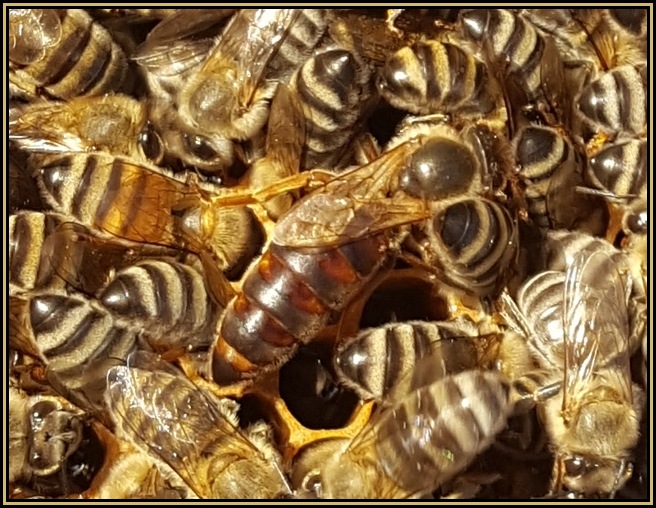
Genetics Determine Behavior
If the bees in your hive(s) are not gentle, they are not acceptable for keeping a backyard hive in this region. Especially in close proximity to communities with neighbors with families, livestock, and wildlife close by.
Africanized bees will fly up to a half of a mile when they get disturbed, looking for something or somebody that is posing at threat to their young. We do not want that to be on our watch. We never know when somebody close by might be anaphylactic allergic and need an EpiPen if they get stung. Not to mention, children, pet, etc. So we have to be considerate of all of our neighbors within range.
That is not just a preference, it is our responsibility as beekeepers. So if our bees change, our responsibility does not.
We may start with gentle stock, but genetics can shift quickly if left unmanaged and the hive swarms, for example, or requeens itself for some other reason. See Swarming for more on this topic.
A hive that becomes defensive is not normally “just having a bad day.”
It is a warning sign that something has changed—and it is our job to correct it. The solution is ultimately introducing a new queen of known gentle genetics asap. See Queen-Maintenance for more on this topic.
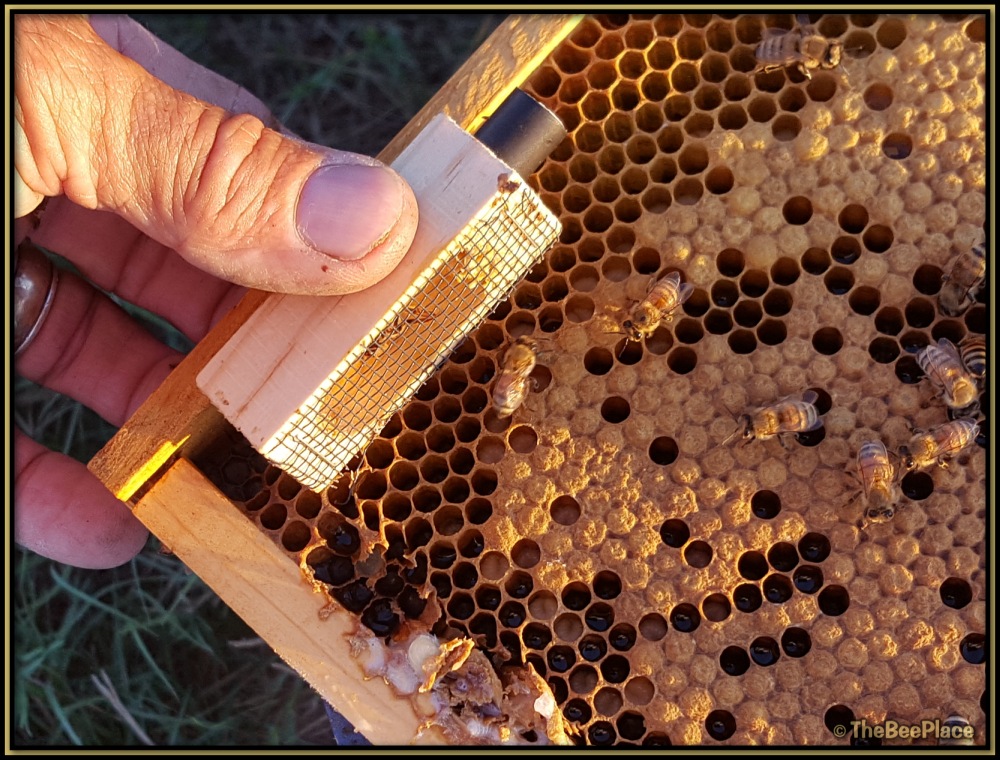
Requeen Without Hesitation
If a hive turns aggressive, the decision has already been made.
We do not wait to “see if it gets better.”
We remove the queen and replace her with known gentle genetics as soon as possible. See Installing Queens for Help on this topic.
Delays increase risk—to us, our family, our neighbors, and anyone within range of that hive.
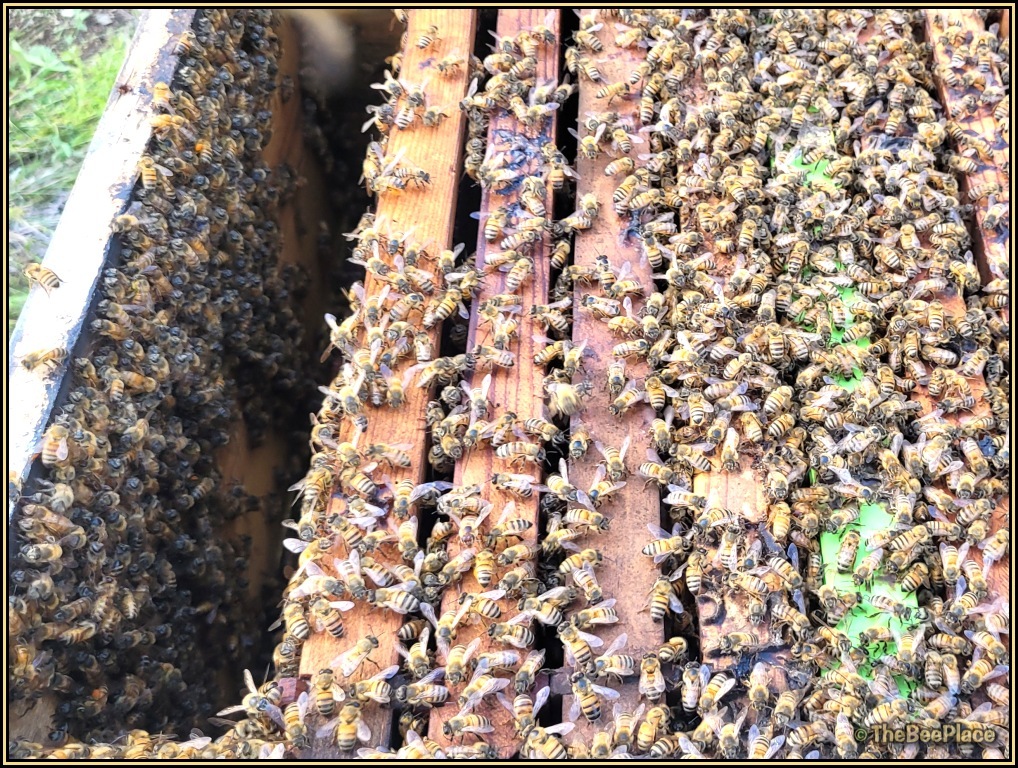
What *Do* Aggressive Bees Look Like
Not all hives show their true behavior right away.
We can open a hive, see a few bees react, and think everything is fine. That can change instantly when we disturb the brood nest area, normally pulling a frame from the middle of the hive.
What was only a few bees reacting can turn into hundreds in our face in seconds. So we keep our protection close by at all times.
Africanized bees look and work just like their Western cousins, but they behave very differently when triggered. They can, at times, be deceptively mild at first and not flood out immediately. But once you break into the brood nest of an aggressive colony, the reaction can explode instantly, and you can be covered in bees before you realize what is happening.
KEEP A VEIL HANDY!
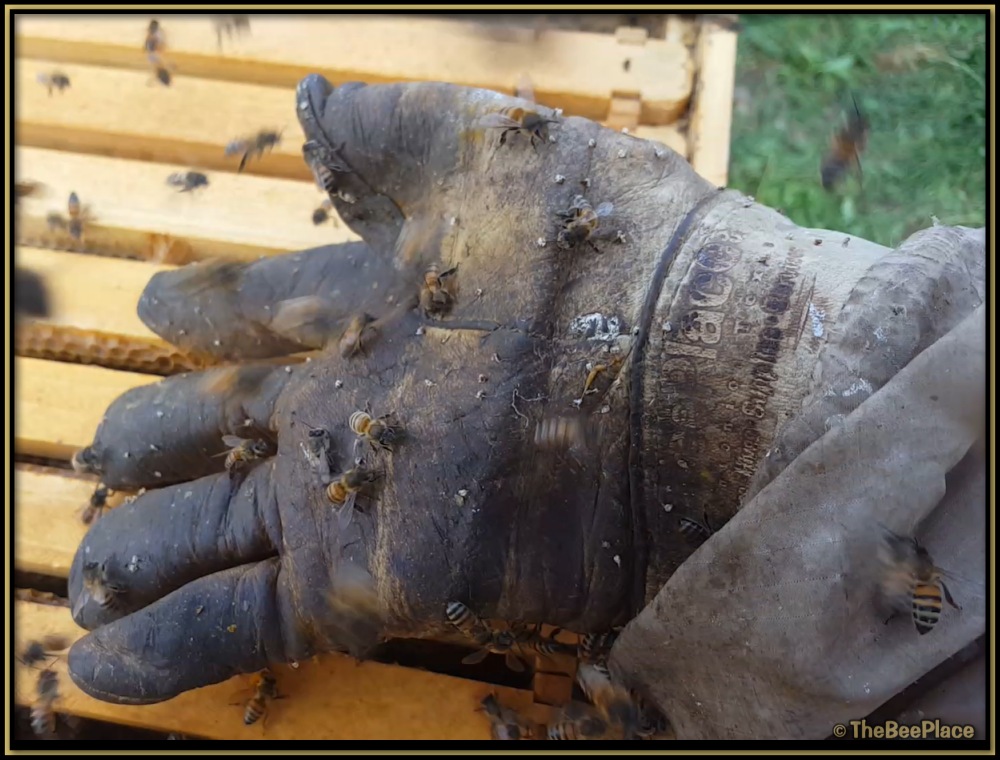
Protective Gear — Know Its Limits
Protective gear helps—but it does not replace responsibility.
A good suit creates distance between the stinger and our skin. That space is what protects us.
A proper vented suit can provide needed protection and add airflow that helps in the heat, but no suit is completely sting-proof. Our Full Vented Suits provide complete upper and lower body protection for working with aggressive hives.
A rubberized netting layer (wider than a bee stinger) is sandwiched between two layers of woven mesh to provide sting resistance while allowing airflow.
If we lean, press, or compress the suit, that protection is reduced.
Gear buys us time—not immunity.
Our first layer of safety is keeping gentle bees. The suit is there for when something goes wrong.
We protect our face first. That is where they go.
For gloves, thickness matters. When dealing with defensive bees, adding a second layer can make a real difference.
More layers = more distance = better protection
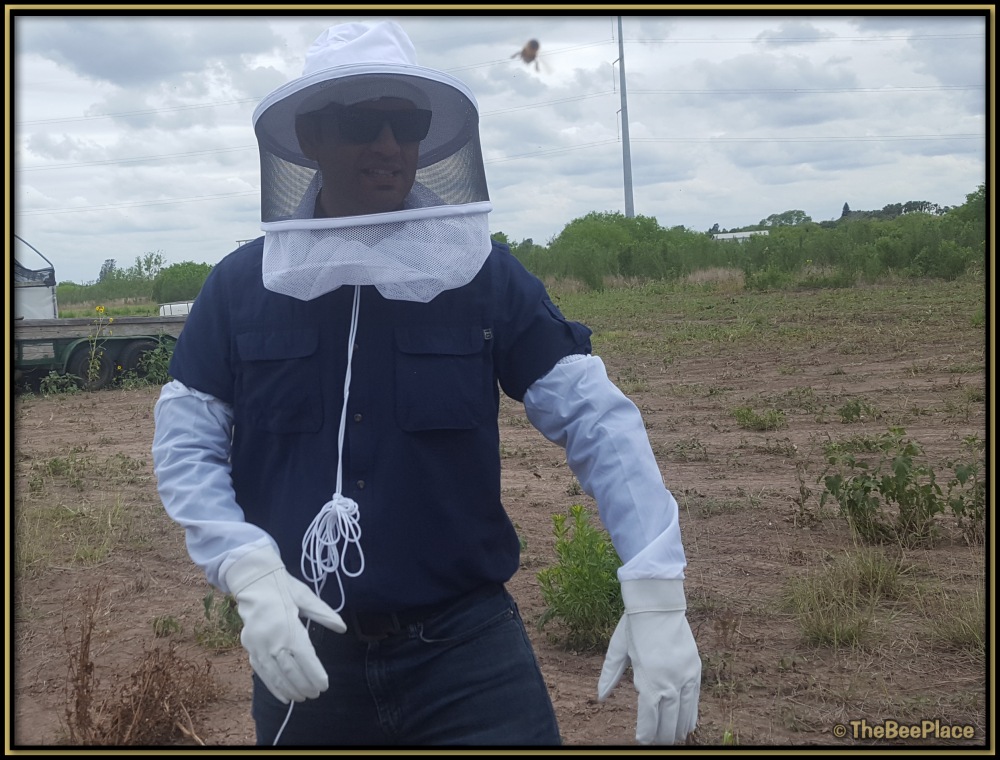
Be Aware of Who Is Around You
When we open a hive, it is not just about us and our bees.
We are potentially affecting everything around us.
Before we start, we look around.
- Who is nearby?
- Are neighbors outside?
- Are kids playing or pets roaming?
If a neighbor approaches while we are in our hives, we should ask ourselves, if we would not feel comfortable taking off our veil and handing it to them, then they are too close to the bees. Make them aware they need to stay back, or we need to get them a veil.
We do not assume others understand what we are doing.
We plan our work so we are not putting anyone else at risk.
- We give ourselves space
- We are mindful of wind direction and flight paths
- We avoid opening defensive hives when others are nearby
- We keep extra protection available for anyone who approaches
Do Not Work Alone When It Matters
Working bees—especially unknown or defensive colonies—is not something we should do alone.
Things can change quickly once a hive is opened.
Having another person nearby gives us a layer of safety we cannot provide for ourselves.
They do not have to be in a suit or working the hive—just present and aware.
If something goes wrong, they can:
- Call for help
- Assist if needed
- Keep others away from the area
Even experienced beekeepers benefit from having someone nearby.
The Face Is the Target
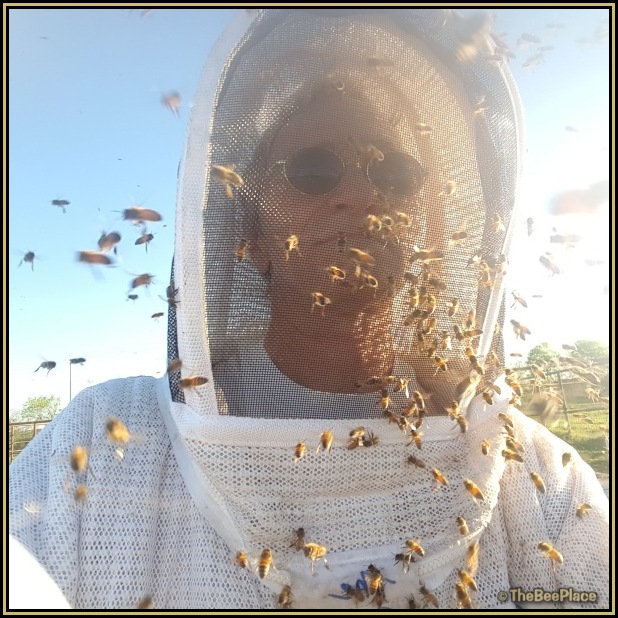
When bees decide to defend, they are not acting randomly.
They go for what stops a threat the fastest.
That means our eyes, our nose, and our mouth.
They follow our breath—carbon dioxide leads them straight to our face.
That is why most stings during an attack happen around the face / head.
We need to protect our face first. Everything else comes second.
We keep our veil ready—even if we are not wearing it.
If a hive gets aggressive, we may not have time to think—we need to act.
- We keep our mouth closed
- We cover our head with a shirt if needed
- We get to an enclosed space quickly
Things That Can Make Matters Worse
Many problems in the bee yard are not caused by the bees—they are caused by decisions.
We try to avoid these type of mistakes:
- Opening a hive without properly smoking them first
- Working bees when unprotected people or animals are nearby
- Standing in front of the hive entrance (their flight path)
- Opening your veil to remove a bee, if one gets inside
- It's better to have only one than several
We do not stand in the runway—bees are trying to land, not avoid us.
- If a bee gets inside our veil, we do not panic.
- One bee inside is better than letting many more in.
- We move to a safe place, like inside a vehicle, then deal with it calmly and without other bees being invited into an opening.
A Cloud In Hot Pursuit
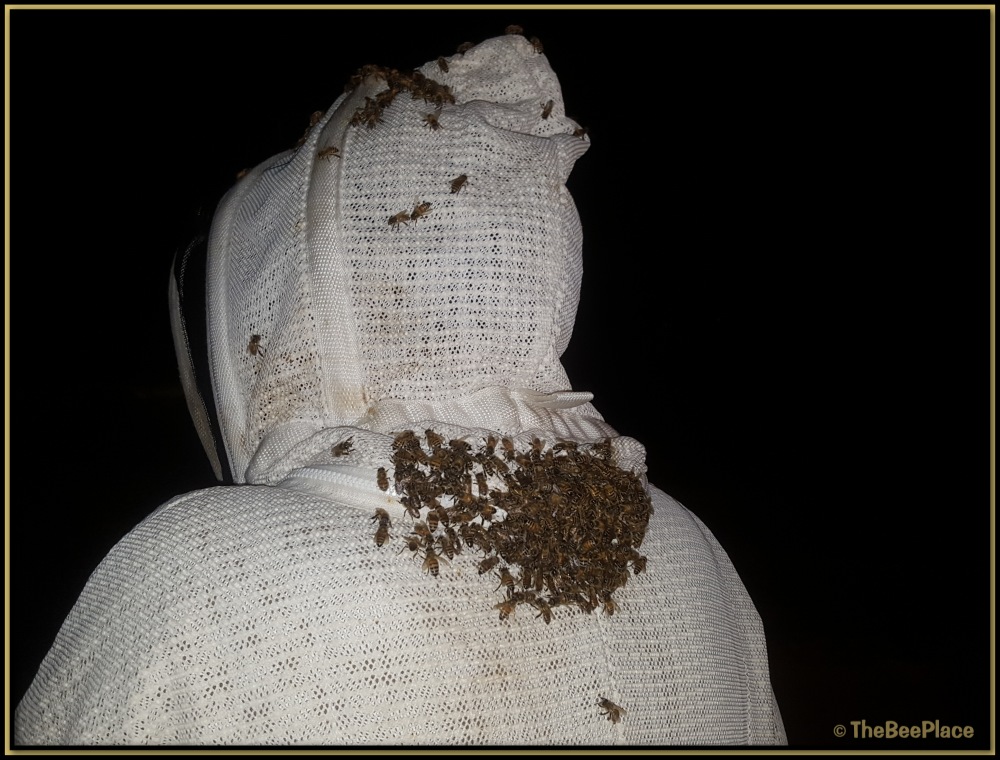
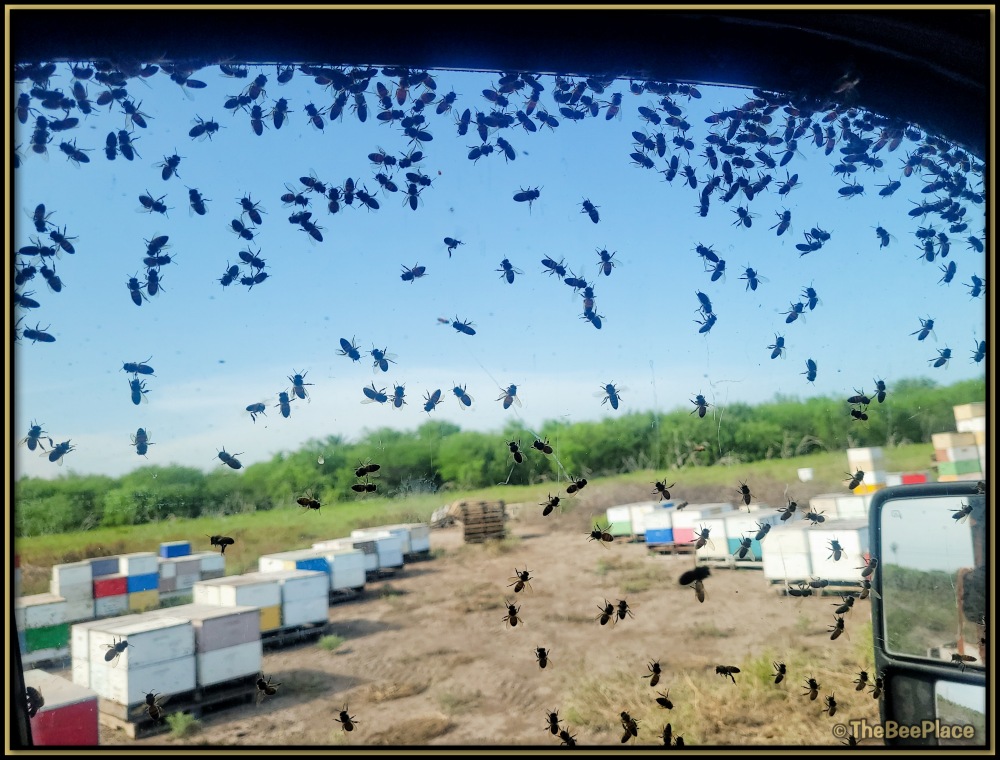
When we leave a hive—especially after working defensive bees—some will follow us. As many as 100 or more in a cloud for up to a half mile in extreme cases. That means anyone you approach is in harms way, so we avoid taking "our aggressive cloud" to our neighbors.
Or if we get into our vehicle, many may cling to our veil and end up in our vehicle.
We do not rush or fight it. There is a simple way to clear them out safely.
When we get into our vehicle:
- We start the engine and turn on the A/C
- We crack the window open about 1 inch
- We wait calmly for about 2 minutes for the "cloud" to exit
The bees inside will move toward the windows and exit fairly quickly
At the same time, outside bees will not come in through an opening that small.
If we open the window too far, they will come in—keep it controlled.
Just another of the many many reasons we like to keep non aggressive bees.
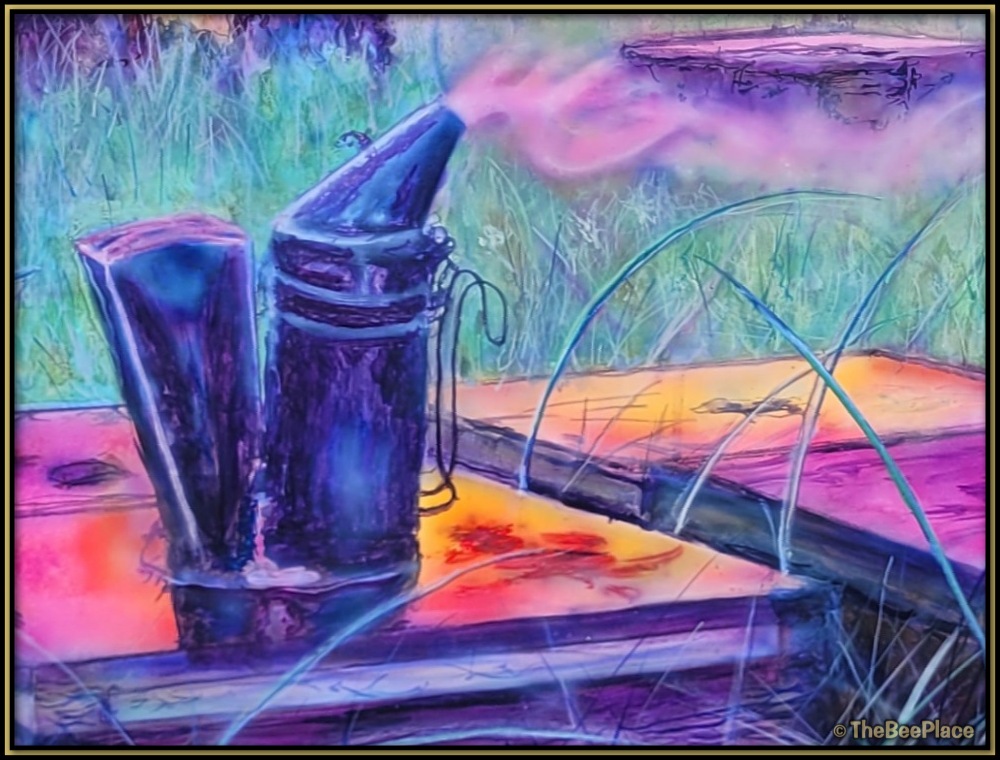
Smoker Fire Safety
A smoker is not just a tool—it is an active fire source.
In dry conditions, it does not take much for a small ember to turn into a serious problem.
Where we place it matters.
- We do not set it in dry grass or leaves
- We avoid using it in high winds or drought conditions
- We keep it on a stable, non-flammable surface
- We never leave it unattended
We are prepared before we light it.
- We keep water or a fire extinguisher nearby
- We make sure it is fully out before we leave
- We do not transport a lit smoker in the back of a truck without plugging it so no smoke is trailing the vehicle.
One careless moment with a smoker can cause damage far beyond our bee yard.
