

Bee Removal

Honey Bee Removal Services
Because we are in Africanized bee territory, safety must always come first!
If you are dealing with an active or dangerous bee situation, treat it as an emergency - do not attempt to handle it yourself. If people or animals are at risk, call 911 immediately.
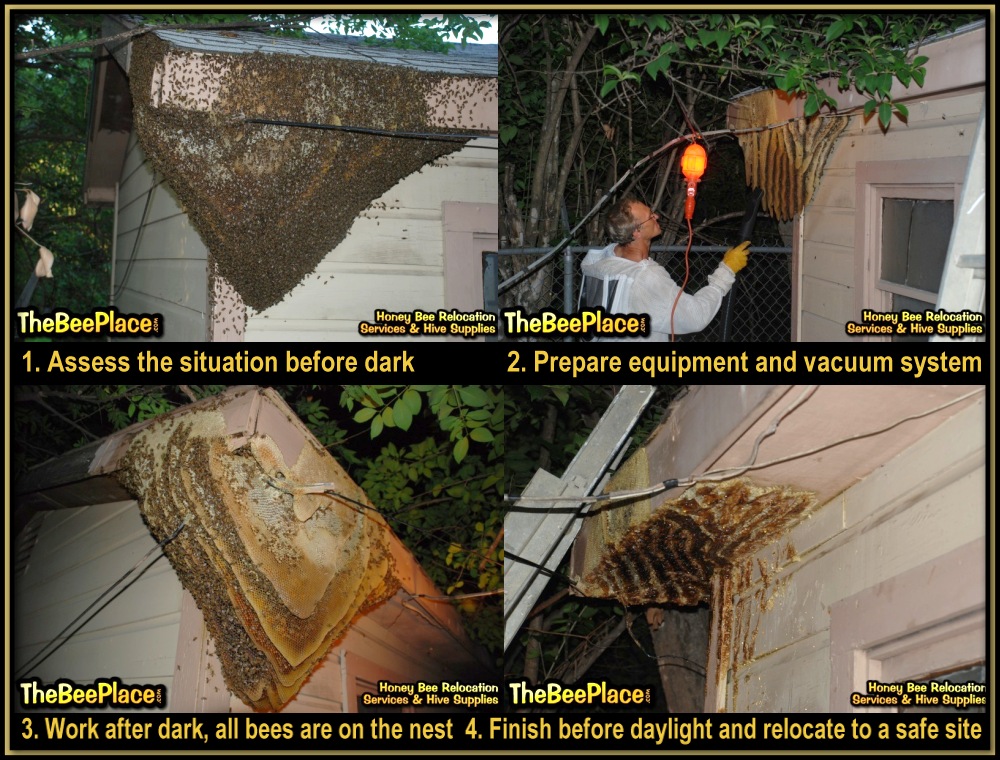
If you choose to hire a professional, make sure they are experienced, properly registered, and follow safe removal practices. Generally speaking, feral bee removals should be performed after dark when all bees have returned to the colony and are not able to pose a threat to the community.
Daytime removals can put the entire area at risk if the colony is even partly Africanized, because they will become very defensive. Understanding that bees can not see to fly at night, the dark decreases the danger to all living beings in the surrounding area. Feral bees tend to be overly aggressive when disturbed and will fly as far as one half of a mile from the nest to discourage any would be intruders.
Be aware, they are a serious matter. Take it from someone that has done over 200 bee removal / relocation jobs in south central and deep south Texas, they are nothing to take lightly.
Bee Removal Options
The images shown here are from 2014 when we first started relocating bees. This one was in a populated San Antonio neighborhood. Not every colony is aggressive—but you don’t know what you have until you’re in it. Always approach wild bees with extreme caution.
Due to time constraints and focus on our current operations, we no longer offer bee removal services.
If you are looking for a qualified beekeeper to remove bees from your property, the Texas Apiary Inspection Service maintains a list of registered beekeepers by county.
The good folks over at the Texas Apiary Inspection Service can help. You can use the link below to find someone in your area on their website:
Find a Registered Bee Removal Specialist

Experience is the best teacher
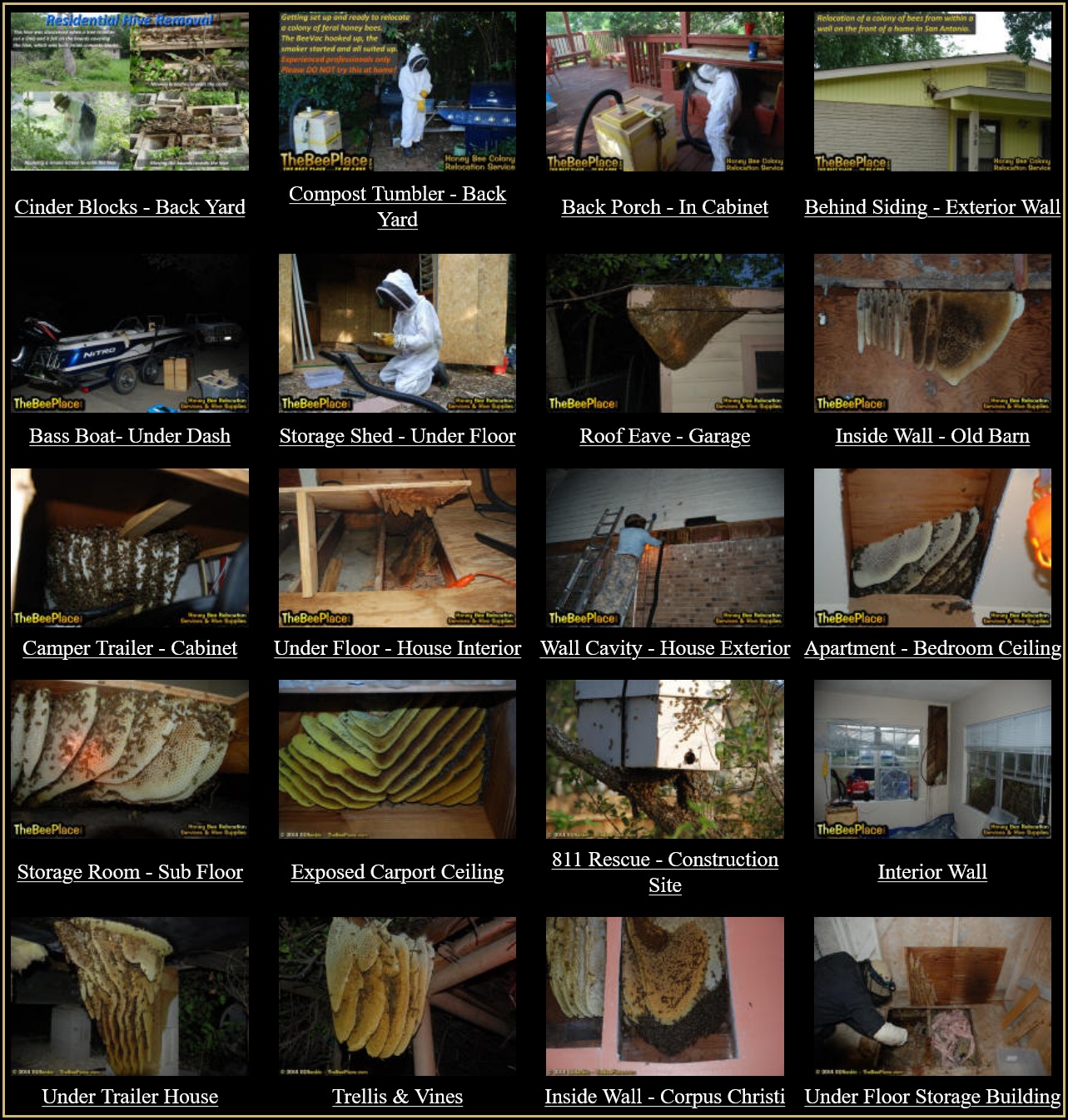
Over the years, we performed hundreds of bee removals, aka "cut-outs" in structures ranging from walls and roofs to farm and oilfield equipment and a few rare open-air nests.
These experiences shaped our understanding of bee behavior—especially here in Africanized territory.
For those interested, we’re archived a collection of real-world removal photos showing where bees live and what can happen when they’re disturbed. Including 9-1-1 assisted calls and other rescue and removal situations worth sharing with others to help educate the public and especially other beekeepers.
The intent is; to show what real bees do in real situations—and why you should respect that. Watch for these coming soon to the new section of our Gallery - to be uploaded as time permits.
